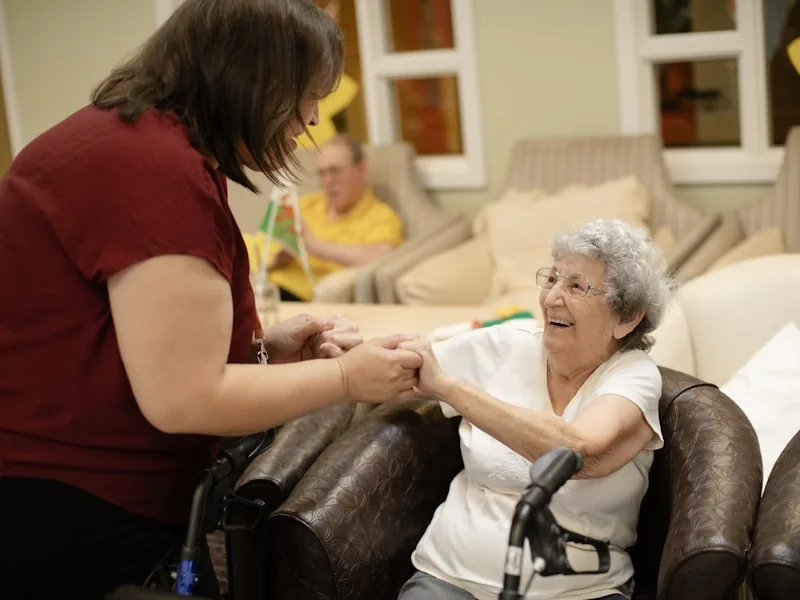
A care home has corridors, a lounge and staff who see each other all day. Home care happens behind someone's own front door, usually with one carer, often at the start or end of the day when the person is at their most exposed. Dignity there is mostly about small things done the same way on every visit, and whether anyone would know if they weren't.
That is also why it is one of the hardest things to evidence. This guide covers regulated home care in England. Wales, Scotland and Northern Ireland have their own regulators and standards, although the principles are much the same.
What dignity in care means
The Social Care Institute for Excellence (SCIE) describes care with dignity as care that "supports the self-respect of the person, recognising their capacities and ambitions, and does nothing to undermine it". It says that includes respect for what they can do, who they are, and the life they have lived.
Dignity is also written into the law that underpins adult social care. Section 1 of the Care Act 2014 gives local authorities a general duty to promote a person's wellbeing, and the first thing it lists under wellbeing is "personal dignity (including treatment of the individual with respect)". When a council commissions your agency, this is part of what it is buying.
What Regulation 10 says
Regulation 10 of the Health and Social Care Act 2008 (Regulated Activities) Regulations 2014 is short. Regulation 10(1) says "service users must be treated with dignity and respect". Regulation 10(2) says that includes, in particular:
- ensuring the privacy of the service user
- supporting the autonomy, independence and involvement in the community of the service user
- having due regard to any relevant protected characteristics, as defined in the Equality Act 2010.
CQC's guidance on Regulation 10 is what providers must have regard to. It says those three things are "not exhaustive" and providers must show they take all reasonable steps to make sure people are always treated with dignity and respect. CQC cannot prosecute for a breach of Regulation 10, but it can take other regulatory action, and it must refuse registration if a provider cannot satisfy it that it will comply.
What CQC's guidance asks of a home care agency
Much of CQC's guidance on Regulation 10 reads as if it were written for home care. Pulled together, it expects that:
- all staff treat people in a caring and compassionate way, and all communication is respectful, using the most suitable means of communication for the person
- people are addressed in the way they prefer
- staff respect people's personal preferences, lifestyle and care choices
- for intimate or personal care, the provider makes every reasonable effort to respect preferences about who delivers it, such as a carer of a specified gender or sex
- privacy is maintained at all times, including when someone is asleep, unconscious or lacks capacity, and people have privacy when they are supported to wash, bathe and use the toilet
- each person's privacy needs and expectations are identified, recorded and met as far as reasonably possible
- discussions about someone's care take place where they cannot be overheard
- people are supported to stay as independent as they want to be, with risks identified and reduced rather than used as a reason to take over
- people are supported to keep up relationships that matter to them and to be involved in their community as much or as little as they wish, and are not left unnecessarily isolated
- people are not discriminated against because of a protected characteristic.
If an agency uses any form of surveillance, the guidance says it must be in the best interests of the people using the service. That matters in home care when families install cameras in the home or ask about them. CQC has separate guidance on using surveillance in your care service.
What it looks like on a visit
None of this needs a special programme. It is the ordinary practice of a good carer, made consistent across the team. SCIE's messages for practice on freedom to choose are a useful summary: everyone has the right to make choices about how they live and how their support is provided, staff should get to know the people they support, and people should be supported to do things for themselves rather than having things done for them.
In someone's home, that tends to mean:
- knocking or ringing and waiting, even if you have a key safe code, and saying who you are as you come in
- using the name the person has asked to be called, not "love" or "darling" unless they have said they like it
- explaining what you are about to do and asking before you do it, every time
- keeping the person covered during washing and dressing, and closing doors and curtains
- letting them do as much as they can for themselves, even when it is slower
- offering real choices about clothes, food and drink, and how the visit runs
- leaving the home the way they like it, not the way you would keep it
- not talking about other clients, or about this person in front of visitors, family or other carers unless they are happy for you to
- noticing when someone seems low, lonely or in discomfort, and acting on it.
The 10 Dignity Do's published by the Dignity in Care campaign cover similar ground, including enabling people to keep "the maximum possible level of independence, choice and control", respecting their right to privacy, engaging with family members and carers as care partners, and acting to alleviate loneliness and isolation. Many agencies use them in induction and team meetings.
Where the office affects dignity
Some of the biggest threats to dignity in home care are decided in the office, not in the person's home.
Visit length. NICE guideline NG21 on home care says visits should be long enough for home care workers to complete their work "without compromising the quality of their work or the dignity of the person", including enough travel time between visits. It says visits shorter than half an hour should be made only if the worker is known to the person, the visit is part of a wider package of support, and it allows enough time for specific, time-limited tasks or to check that someone is safe and well. If a commissioned visit is too short to give personal care with dignity, raise it with the commissioner and keep a record that you did.
Continuity. NG21 asks providers to prioritise continuity so the person is supported by the same workers and becomes familiar with them, to introduce people to new workers, and to tell people in advance if staff will change and why. A stranger turning up to help someone shower is a dignity issue as much as a rota one.
Matching. NG21 asks for a transparent process for matching care workers to people, and for care that respects the person's cultural, religious and communication needs. CQC's guidance asks you to respect preferences about who gives intimate care. Those preferences only work if they are recorded where the person building the rota will see them.
Respectful records. How carers write about people is part of how they treat them. Care notes should describe what happened in plain, respectful language, written as if the person will read them, because they have the right to.
Where dignity sits in a CQC assessment
Under CQC's single assessment framework, dignity is most directly assessed through the kindness, compassion and dignity quality statement under the caring key question. CQC says this statement means, among other things, that people feel staff listen to them and communicate in a way they understand, that staff know their preferences, wishes, personal histories and backgrounds, and that "people's privacy and dignity is respected and upheld at all times". The "I statement" for it is simply "I am treated with respect and dignity."
Two other caring statements overlap with it: treating people as individuals, and independence, choice and control, which lists Regulation 10 among the regulations to consider. Much of the evidence for all three comes from what people and their families tell inspectors, so how you ask for feedback and what you do with it matters. NG21 also asks providers to regularly seek feedback, both positive and negative, including from people who do not have a carer or advocate.
How to evidence it
Dignity is shown mostly by consistency between what the person says matters, what the care plan records, and what the visit notes show. When an inspector looks, they will want to see that:
- the care plan records how the person likes to be addressed, their routines, what they can do for themselves, their privacy needs and any preference about who gives personal care
- the rota reflects those preferences, and the person mostly sees carers they know
- visit notes are respectful and show choice being offered, not just tasks completed
- carers have been trained in privacy and dignity, which is one of the standards in the Care Certificate, and spot checks and supervision look at how they actually work
- concerns raised by people and families have been listened to and acted on, through your complaints procedure where needed
- anything that crosses into neglect or degrading treatment has been handled under your safeguarding procedure.
A person-centred care plan is where most of this starts. If a preference is not written down, the carer covering a weekend shift has no way of knowing it.
How HomecareOS helps
In HomecareOS, each person's care plan has an About me section alongside sections such as personal care, communication and mobility, each with its own review date, so carers can see how someone likes to be supported before they arrive. Each service user's preferred carers are held on their record and are visible when a visit is assigned, and on the Pro tier the AI Rota Builder can weigh continuity and recorded preferences, including gender preferences, when it drafts a rota for a coordinator to review.
None of that replaces a good carer. It makes it more likely that the good practice one carer has learned about a person reaches the next one. If you would like to see how that looks, book a 15-minute demo or call Phil on 01905 674704.
Sources
- Regulation 10 on legislation.gov.uk, for the wording of the regulation.
- CQC guidance on Regulation 10: Dignity and respect, for what providers must have regard to on privacy, preferences, independence and protected characteristics, and CQC's enforcement position.
- CQC quality statement: kindness, compassion and dignity, treating people as individuals and independence, choice and control, for where dignity sits in the single assessment framework.
- CQC, using surveillance in your care service, for guidance on cameras and other surveillance.
- Care Act 2014, section 1, for personal dignity as part of a local authority's wellbeing duty.
- NICE guideline NG21: Home care, recommendations, for visit length, short visits, continuity, matching and seeking feedback.
- SCIE, defining dignity in care and freedom to choose and dignity in care, for the definition of dignity in care and messages for practice.
- Dignity in Care, the 10 Dignity Do's, for the campaign's ten principles.