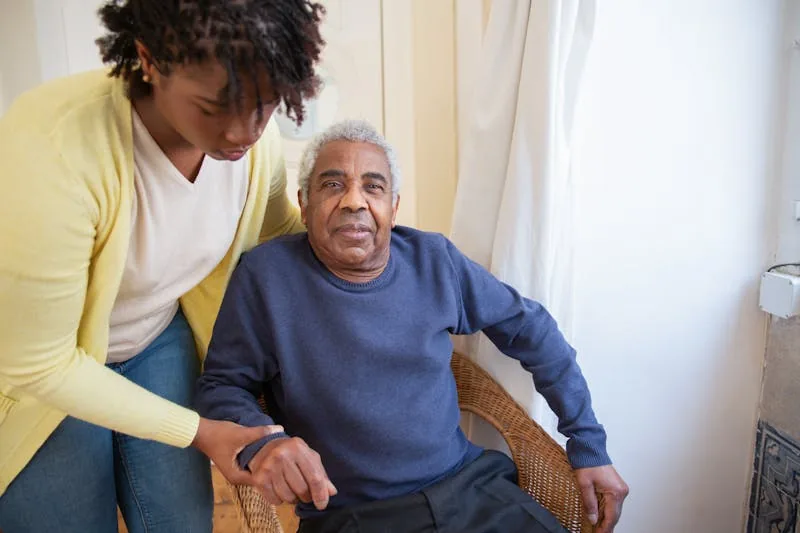
A care worker can visit six or seven homes in a morning. Each one has its own sink, towels, bins and washing machine, and none of them belongs to the agency. That is what makes infection prevention and control (IPC) in home care different from a care home, and it is why the latest national guidance now talks about domiciliary care directly rather than leaving agencies to adapt guidance written for residential settings.
This guide covers regulated home care in England. Wales, Scotland and Northern Ireland have their own regulators and guidance.
The new UKHSA guidance for adult social care
On 28 October 2026 the UK Health Security Agency (UKHSA) and the Department of Health and Social Care (DHSC) published Infection prevention and control (IPC) in adult social care (ASC). It is written for everyone working in adult social care in England, and its scope names care homes, supported living, day services and domiciliary care.
The guidance says it updates the 2022 guidance on IPC in adult social care settings and the 2013 care homes IPC guidance, so that everything is in one place. It is split into chapters, including standard infection control precautions, transmission-based precautions, outbreaks, diarrhoea and vomiting, vaccinations, staff health and an A to Z of infections of concern.
On home care, the background and responsibilities chapter says care and support workers "operate in environments they do not control, and people retain the right to make decisions about their own space and daily life". It says IPC measures must be applied in a way that is "person-centred, proportionate, and respectful of consent, dignity and autonomy, while still managing risks effectively".
That is a useful sentence to keep in your policy. It explains to an inspector why your carers do not run a client's kitchen like a clinic, and it reminds carers that the person's choices still count.
What the law and CQC expect
Regulation 12 of the Health and Social Care Act 2008 (Regulated Activities) Regulations 2014 covers safe care and treatment. Regulation 12(2)(h) requires "assessing the risk of, and preventing, detecting and controlling the spread of, infections, including those that are health care associated".
CQC's guidance on Regulation 12 points to the DHSC code of practice on the prevention and control of infections. CQC says the law requires it to take the code into account when making decisions about registration. By following the code, providers can show how they meet the regulation, but they do not have to comply with the code by law, and they may meet the regulation in a different way that is equivalent or better.
CQC's guidance also says that when assessing risk, providers should consider the link between IPC, antimicrobial stewardship, how medicines are managed and cleanliness. Its guidance on medicines in the same regulation says staff must follow medicines policies, including those related to infection control.
The UKHSA guidance adds that the code supports Regulation 12, Regulation 14 on nutrition and hydration, Regulation 15 on premises and equipment and Regulation 17 on good governance, and that the health and safety duties of the Health and Safety at Work etc. Act 1974 and the Control of Substances Hazardous to Health (COSHH) regulations also apply.
What the code of practice asks of a home care agency
The code sets out ten criteria. Not all of them apply in the same way to an agency that works in people's own homes, and the code says so.
A designated IPC lead. For a small service providing personal care, the code says someone with appropriate knowledge and skills should become the designated IPC lead. It says this could be the registered provider, the registered manager or another member of staff. As a minimum, it expects:
- policies, procedures and guidance, and information on how they will be kept up to date and monitored
- the initial and ongoing training staff will receive
- a record of the names and contact details of health practitioners who can give advice, such as GPs, the local IPC team, the local UKHSA health protection team and the local authority public health team
- guidance for staff on the circumstances in which they should make contact.
An annual statement. The code says the annual statement for a small social care service does not need to be as detailed as one for a health setting. It should give a short review of any known outbreaks of infection, audits undertaken and the actions that followed, action taken after an outbreak, IPC risk assessments, the education and training staff received, and the review and update of policies, procedures and guidance. It should be available to anyone who wishes to see it, including the people you support and regulators.
The environment. Criterion 2 covers a clean environment in managed premises. The code says domiciliary care services that support people in their own homes "will not be expected to comply with this criterion", and its definition of managed premises excludes the home of someone receiving domiciliary care.
Information for people and families. Under criterion 4, the code says domiciliary care services do not need the full range of information suggested for other settings, but should provide information about their approach to preventing infection, staff roles and responsibilities, and whom people should contact with concerns.
Standard precautions on a home visit
The UKHSA chapter on standard infection control precautions says these are the basic measures everyone should use, for everyone they support, at all times, whether or not an infection is known or suspected. It summarises them as: clean hands regularly, report infections early, use PPE when needed, keep things clean, handle waste and sharps safely, act quickly on spills or exposure, and use good respiratory hygiene and ventilation.
The home care detail is where it gets practical.
Hand hygiene
The guidance says providers of home care "must make sure that care and support workers always have access to portable hand hygiene equipment", such as alcohol-based hand rub in easily carried containers, portable liquid soap, and paper towels or kitchen roll. Carers should be bare below the elbows: no hand or wrist jewellery apart from a plain ring, and short, clean nails with no varnish or artificial nails.
The diarrhoea and vomiting chapter adds that carers should avoid using the person's fabric towels, and that alcohol-based hand rub is not effective against all the pathogens that cause diarrhoea and vomiting, especially norovirus and C. difficile, so carers should wash hands with soap and water immediately after removing gloves and aprons.
PPE
The guidance says providers must provide PPE free of charge if a risk assessment shows it is needed. In home care, it says PPE at the point of care "will often mean taking the PPE needed for the visit with you". It also warns against overuse, giving the example of wearing gloves for social contact or an apron for every interaction regardless of the task. For a person with respiratory symptoms at home, it says carers can wear a fluid-resistant surgical mask to protect themselves.
Equipment and cleaning
The guidance says carers are not always responsible for cleaning in someone's home, but if there is a risk of contamination a carer may need to clean a surface before starting a care task. Equipment taken into a home should be cleaned before entering, before leaving and again before going back into storage. If items are carried in a vehicle, they should go in a clean, dry, lidded storage box, and the guidance says the care provider should supply those boxes.
Waste and sharps
The guidance says it is rare for carers to manage waste regularly in home care. Where waste produced during the care activity is less than 7kg, it can go in the person's general waste bin, including non-hazardous items such as dressings, personal hygiene products or continence pads from a healthy person. Waste from healthcare treatment should be double bagged and put in the domestic bin with the householder's permission. If more than 7kg is produced, the carer should report it to their manager so that collection can be arranged. Sharps bins in home care should be disposed of in line with local arrangements.
Laundry
The guidance recognises that in home care, laundry is done with the person's own facilities, so the hospital laundry standards do not apply. Carers should not carry linen loose in their hands to the machine, should wash hands between handling clean and used linen, and should not use short wash cycles for visibly soiled or infectious items.
Spotting infection and outbreaks across many homes
The guidance says carers in home care are often the first to notice a change in someone's health or behaviour, and that new clients should be asked about previous infections, such as urinary tract infections, MRSA or C. diff, so this can inform care planning. That belongs in your initial assessment and the care plan.
The outbreaks chapter defines an outbreak as two or more people with the same infection linked in time and place or by a common exposure, including staff. It says outbreaks can happen in home care "where they may be harder to spot", and that "rota patterns, sickness data and call logs may be useful to monitor and detect outbreaks and act early".
For an agency, that means looking across the office's own records. If three people on the same run report vomiting in a week, or two carers who cover the same clients go off sick with the same symptoms, that is worth a call to your local UKHSA health protection team. When an outbreak is suspected, the guidance says the home care provider's manager or office team should inform relevant commissioners and any other agencies involved in the person's care, and let affected people and their families know.
Staff sickness and when carers should stay off
The staff health chapter says registered managers should support staff to report symptoms and stay away from work when needed, have plans to keep care going when staff cannot work, and make sure staff who are more vulnerable to infection, such as those who are pregnant or have a weakened immune system, have risk assessments in place. It notes that in home care, staff absence "can lead to delayed or missed visits if cover is not available".
Its table of recommended exclusion periods includes:
- Diarrhoea and/or vomiting: stay off until clinically well and 48 hours without diarrhoea or vomiting.
- Acute respiratory infections: stay off with a high temperature or if not well enough to work. Staff with only mild symptoms, such as a runny nose or mild cough, who are otherwise well enough, do not usually need to stay off, but should follow standard precautions.
- Chickenpox: stay off until all blisters are dry and no new ones are forming.
The table covers other infections too, and the guidance says advice during an outbreak may differ from it. Link to the table from your sickness absence procedure rather than copying it, so carers always see the current version.
What to keep on file
An inspector looking at IPC in a home care agency is likely to want to see that the arrangements above actually happen. A practical file includes:
- an IPC policy that reflects the 2026 UKHSA guidance and names your IPC lead
- your list of local contacts for advice: GP surgeries, the community IPC team, the UKHSA health protection team and the local authority public health team
- IPC training records for every carer, with renewal dates, as part of your mandatory training and the Care Certificate for new staff
- a record of who has read and acknowledged the current policy
- your audits of IPC practice, such as observed hand hygiene and PPE use on spot checks, and what changed as a result
- infection information in each person's care plan where it is relevant, shared only with those who need it
- records of any suspected outbreaks, who you told and what you did
- your annual statement.
How HomecareOS helps
HomecareOS includes an infection prevention and control template in its policy library. You edit it in your own words, publish it, and each carer's acknowledgement is timestamped. Training tracking flags IPC and other mandatory courses before they expire. When a carer's sickness absence is recorded, the visits they were due to do go back to the rota as needing cover, so a carer told to stay off for 48 hours does not leave calls unallocated.
HomecareOS does not decide whether you have an outbreak or contact the health protection team for you. That stays with your IPC lead.
If you want to see how this would look for your agency, book a 15-minute demo or call Phil on 01905 674704.
Sources
- UKHSA and DHSC: Infection prevention and control (IPC) in adult social care (ASC), for the scope, publication date and the chapters it contains.
- UKHSA: Background, context and responsibilities for IPC in ASC settings, for domiciliary care in scope and the responsibilities of managers and carers.
- UKHSA: Standard infection control precautions in ASC, for hand hygiene, PPE, equipment, waste, sharps and laundry in home care.
- UKHSA: Managing outbreaks in ASC settings, for the outbreak definition and spotting outbreaks in home care.
- UKHSA: Managing suspected infectious diarrhoea and/or vomiting in ASC, for towels, hand rub and handwashing.
- UKHSA: Staff health and managing sickness related to infection in ASC, for exclusion periods and managers' duties.
- DHSC: Health and Social Care Act 2008 code of practice on the prevention and control of infections, for the criteria, the IPC lead and the annual statement.
- Regulation 12, Health and Social Care Act 2008 (Regulated Activities) Regulations 2014, for the legal duty.
- CQC: Regulation 12 guidance, for how CQC uses the code.
- HSE: COSHH, for the hazardous substances duties the UKHSA guidance refers to.