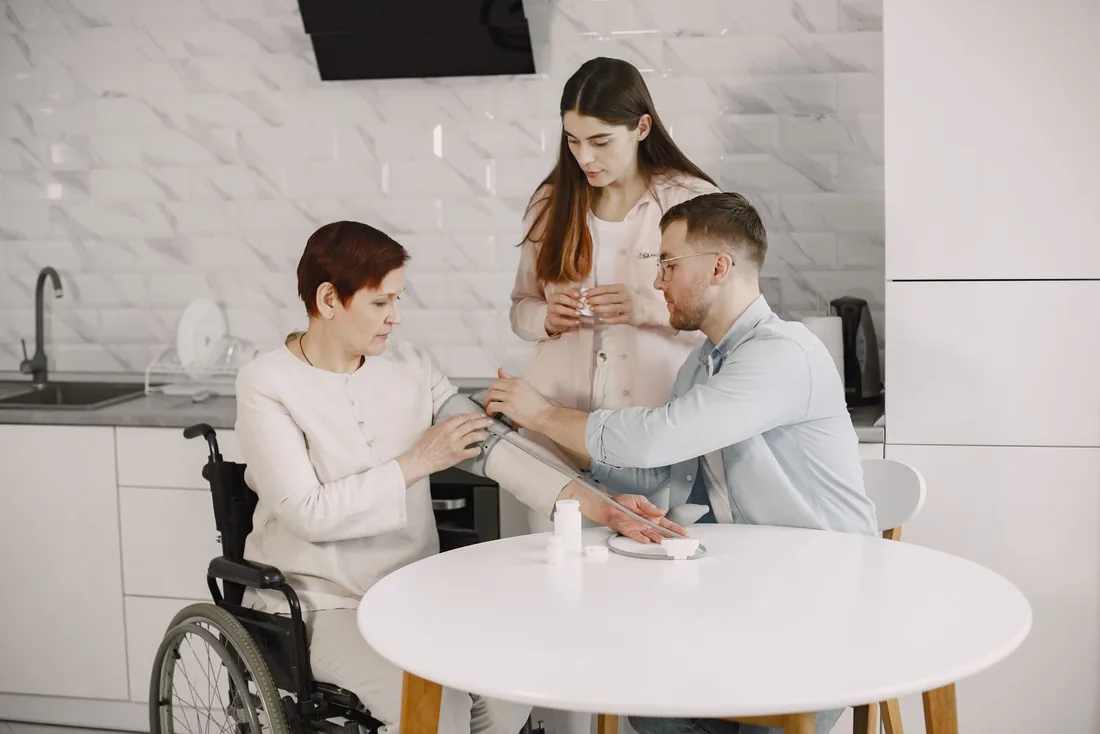
A home care risk assessment is a written look at what could cause harm during a person's care, to them or to the carer, and what the agency will do to make that harm less likely or less serious. It is not a one-off form at the start of a package. CQC expects it to be reviewed, followed and acted on for as long as care continues.
This guide covers England, where CQC regulates home care. Wales, Scotland and Northern Ireland have their own regulators and standards, set out in home care compliance in the four UK nations. The health and safety law from HSE applies across Great Britain. Use this alongside your own policies, and take legal advice where your situation is not clear-cut.
Where the duty comes from
Two sets of law meet in a home care risk assessment: one about the person receiving care, and one about your staff.
Regulation 12, safe care and treatment. The first thing Regulation 12 lists is "assessing the risks to the health and safety of service users of receiving the care or treatment", followed by "doing all that is reasonably practicable to mitigate any such risks". The same regulation names staff competence, equipment, medicines and infection control, so all of these belong in the assessment where they apply.
CQC's guidance on Regulation 12 adds detail that shapes how you should work:
- Risk assessments must be completed and reviewed regularly by people with the qualifications, skills, competence and experience to do so.
- They should include plans for managing the risks.
- They should balance the needs and safety of the person with their rights and preferences.
- They should include arrangements to respond appropriately and in good time when needs change.
- They must be carried out in line with the Mental Capacity Act 2005.
- Relevant health and safety concerns, including allergies and other limitations, should be in the care plan, and staff must follow it.
CQC can prosecute a breach of Regulation 12 that leads to avoidable harm, or that exposes someone to a significant risk of harm, without first serving a warning notice. It also says it will not treat care as unsafe where a provider can show it took all reasonable steps to manage the risks. A good risk assessment is how you show that.
Health and safety at work. Regulation 3 of the Management of Health and Safety at Work Regulations 1999 requires every employer to make a "suitable and sufficient assessment" of the risks to its employees at work, and to people not in its employment who are affected by its work. HSE's page on care in people's own homes explains that where the Health and Safety at Work Act applies, significant risks to both the carer and the person receiving care must be adequately assessed. HSE says carers employed by agencies are unlikely to count as purely domestic workers, so for most agencies the Act is likely to apply, although HSE notes each case is decided on its facts.
What NICE NG21 adds about positive risk taking
NICE guideline NG21, Home care: delivering personal care and practical support to older people living in their own homes, is the national guidance written specifically for home care. Recommendation 1.3.14 says that when assessing risk, you should balance the risk of an activity against how it is likely to benefit the person's wellbeing and quality of life. It then asks the people planning home care to:
- complete a risk plan with the person as part of home care planning, and include it in the home care plan
- include strategies to minimise the risk, such as specialist equipment, verbal prompts or support from others
- include the implications of taking the risk, for the person and for the care worker
- carry out risk assessments as part of planning and at relevant intervals, such as when significant factors change
This is what people mean by positive risk taking. A man who wants to keep making his own tea despite a tremor is not a problem to be removed from the plan. The assessment records the risk of a scald, what he wants, what will make it safer (a kettle tipper, a prompt to sit down, the carer staying nearby), and what it means for the carer on the visit.
NG21 was written for older people, but its approach to risk is a sound starting point for anyone you support at home.
A five-step method that fits home care
HSE's steps needed to manage risk are written for any workplace, but they translate well to a visit in someone's home:
- Identify hazards. Think about how the care is given and what equipment is used. HSE says the most common causes of injury and ill health to carers in people's homes are moving and handling, and dealing with behaviour that challenges. Look at your accident and incident records too.
- Assess the risks. Decide who might be harmed and how, what you already do to control the risk, and what more is needed, by whom and by when.
- Control the risks. Ask first whether the hazard can be removed. If not, decide how to make harm unlikely, for example through equipment, a different way of doing the task, training or personal protective equipment. HSE does not expect every risk to be eliminated, only that you do what is reasonably practicable.
- Record your findings. HSE says employers with five or more people must record their significant findings. For the person receiving care, CQC and NICE expect the risk plan to sit in the care plan.
- Review the controls. Check they are working, and review after accidents or near misses, or when people, processes or equipment change.
Many agencies score each risk by multiplying likelihood by impact, each on a scale of one to five. That is a common method, not a legal requirement. What matters is that the score leads to proportionate controls, and that the same risk would be scored the same way by two different coordinators.
What a home care risk assessment usually covers
There is no single national template, and the right content depends on the person and their home. Most agencies assess some or all of the following:
- Moving and handling, including the equipment used and who owns and maintains it.
- Falls, inside the home and on the way in and out.
- Medicines, which NICE NG67 and our guide to medication management in home care cover in detail.
- Eating, drinking and choking, alongside any advice from a speech and language therapist.
- Skin integrity and pressure care, which NG21 lists as an area where social care staff should work with healthcare practitioners.
- Infection prevention and control, which Regulation 12 names directly.
- The home environment, such as fire safety, trip hazards, lighting, pets, access and parking.
- Behaviour that challenges, and what helps the person feel safe.
- Lone working for the carer, which HSE says must be included in your general risk assessment. Our lone working guide goes through it.
- Safeguarding concerns, handled under your safeguarding adults procedure rather than only in the risk plan.
- Mental capacity, where a decision about a risk needs a capacity assessment or a best interests decision.
Equipment the person owns
HSE explains that when a carer uses the person's own equipment, such as a hoist, that equipment is not supplied for use at work, so the person has no duties under the Lifting Operations and Lifting Equipment Regulations (LOLER). The duty to keep the carer safe, so far as is reasonably practicable, rests with the employer. HSE says the employer then needs to decide whether to provide suitable alternative equipment or take adequate steps to make sure the person's equipment is properly maintained and safe to use, and that everyone's responsibilities should be set out in the care contract. Record in the assessment who services the hoist, when it was last checked, and what a carer should do if it looks unsafe.
Missed and late visits belong in the risk assessment
NICE NG21 is clear that a missed visit is a risk in its own right. It says to monitor closely the risks of missed or late visits, and recognises that people living alone or who lack capacity may be particularly vulnerable. It asks agencies to plan for missed visits, which could include arranging for a family member, carer or neighbour to visit, giving carers that person's contact details, and "setting out clearly in the person's risk assessment what should happen if a visit is missed". NG21 also says monitoring of missed and late visits should be part of your quality assurance and discussed at contract monitoring meetings.
In practice, that means each risk assessment should say how time-critical the person's calls are, for example because of medicines or diabetes, and what the office does when a visit has not started. Our guide to electronic call monitoring explains how clock in records help you spot those visits.
Keeping the assessment alive after the first visit
A risk assessment that sits in a folder does not help a carer at 7am on a Monday. A few habits keep it useful:
- Put the risk where the carer will see it. CQC says staff must follow care plans, and they can only follow what they can find during the visit.
- Review on change, not only on a date. A hospital discharge, a fall, a new medicine or a carer's report that something is different should all prompt a review. CQC's guidance says this applies when people are admitted, discharged, transferred or move between services.
- Link incidents back to risks. CQC's guidance says incidents must be investigated and the learning used to prevent recurrence. If a fall happens, the falls risk should be revisited, and the review recorded.
- Record who reviewed it and when. Being able to show the last review date and reviewer is simple evidence that the assessment is current.
- Train for it. NICE NG21 asks for induction and ongoing training on what "safe" care is and on identifying and responding to environmental risks.
How HomecareOS helps
In HomecareOS, risk assessments are part of the care plan rather than a separate document. Each risk links to the section of the plan it belongs to, so a falls risk sits with mobility, and the risks a carer needs to know are shown on the visit. Risks are scored from likelihood and impact on a scale of one to five, with the band worked out from the two numbers, and each risk records its existing controls, any further controls needed, a review date and the name of whoever last reviewed it. Incidents run through investigation, root cause, actions and shared learning before they can be closed. You can see how this works on the care planning and compliance pages.
To see it on your own service users, book a 15-minute demo or call 01905 674704.
Sources
- CQC: Regulation 12, safe care and treatment, for the regulation's wording, CQC's guidance on risk assessments and its approach to prosecution.
- NICE NG21: Home care recommendations, for recommendation 1.3.14 on risk plans, 1.4.10 to 1.4.14 on missed and late visits, and 1.7.6 on training.
- HSE: Care provided in people's own homes, for when the Health and Safety at Work Act applies, the main risks to carers and the position on a person's own equipment.
- HSE: Steps needed to manage risk, for the five-step method and the duty to record significant findings.
- legislation.gov.uk: Management of Health and Safety at Work Regulations 1999, regulation 3, for the employer's duty to make a suitable and sufficient risk assessment.
- NICE NG67: Managing medicines for adults receiving social care in the community, referred to for medicines risks.