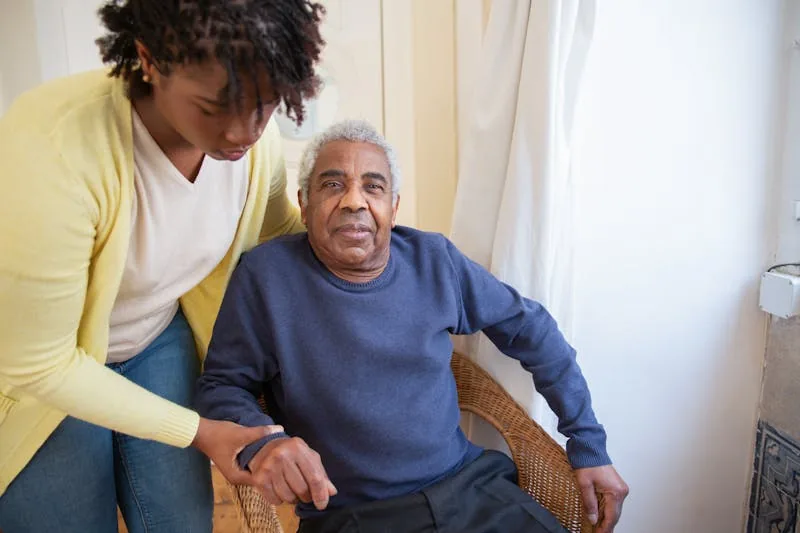
Falls are common, particularly in older people. The NHS page on falls lists familiar causes: weaker muscles, conditions that affect mobility or balance, low blood pressure, side effects of medicines, problems with sight or hearing, and dementia. Most of the people a home care agency supports live with at least one of those.
That makes falls prevention part of ordinary domiciliary care, not a specialist add-on. A care worker is often the first person to hear that someone has fallen overnight, the first to notice a new shuffle to the bathroom, and the person who will write the only contemporaneous record if something happens on a call. This guide is for registered managers in England. It is not clinical advice. Assessment and treatment of the causes of falls belong with a GP, a falls clinic or another healthcare professional. Asking, recording, following the plan and escalating are where the agency makes the difference.
The guidance that applies
Four public sources cover most of what an agency needs.
- **NICE guideline NG249**, Falls: assessment and prevention in older people and in people 50 and over at higher risk, published on 29 April 2025. It updates and replaces the 2013 guideline CG161. Its recommendations apply to people aged 65 or over, and to people aged 50 to 64 with one or more factors that could increase their risk of falls.
- **NICE quality standard QS86** covers prevention of falls and assessment after a fall for the same groups, including people living in the community. It was aligned with NG249 when the guideline was published.
- **NICE guideline NG21** on home care says practitioners planning home care should complete a risk plan with the person, include strategies to minimise risk, and review it when significant factors change. Continuity of care matters here too: workers who know the person are better placed to spot a change in mobility or a near miss.
- **Regulation 12** of the Health and Social Care Act 2008 (Regulated Activities) Regulations 2014 requires providers to assess risks to people's health and safety and do all that is reasonably practicable to mitigate them. CQC's guidance on Regulation 12 and its managing risks page set out what inspectors look for, including that people are involved in decisions about risks they take and that freedom, choice and control are not restricted without good reason.
NG249's glossary puts people's own homes firmly in scope. Community settings means settings where no accommodation or hospital admission is involved, including people's homes, community services, GP practices, outpatient clinics, emergency departments and minor injuries units. Residential care and hospital recommendations in NG249 are written for those settings; this guide focuses on the community pathway that applies to domiciliary care.
Do not score the person with a prediction tool
Recommendation 1.1.1 is short and easy to miss: do not use falls risk prediction tools to predict a person's risk of falling.
That matters for home care because many older assessment packs still include a scored falls tool copied from a care home form. NG249 moved away from that approach. Instead of a score that claims to predict the next fall, the guideline asks you to take a falls history and to use clear trigger criteria for a comprehensive assessment.
Ask about falls, every time it matters
Recommendation 1.1.2 says that in community settings you should ask people about the details of any falls. That can be when someone presents after a fall, or by asking opportunistically, for example at routine appointments and annual health checks, whether they have fallen in the last year.
For an agency, the practical points are:
- Ask at the initial assessment, and write the answer in the risk assessment and the care plan, not only in a referral letter.
- Ask again after a hospital discharge, a new medicine, an illness, or any report from the person or their family that something has changed.
- Ask about near misses and "I nearly went" moments as well as falls that reached the floor. People under-report falls. The NHS page encourages people who are worried about balance or who have had a fall to see a GP; your carers are often the ones who hear that worry first.
- Record what the person says in their own words where it helps: when it happened, where, whether they hit their head, whether they could get up, and what they think caused it.
When a comprehensive falls assessment is needed
Recommendation 1.1.3 says to offer a comprehensive falls assessment and comprehensive falls management to people in the community who have fallen in the last year and meet any of these criteria:
- living with frailty
- injured in a fall and needed medical or surgical treatment
- loss of consciousness related to the fall
- unable to get up independently afterwards
- two or more falls in the last year
NG249 says this can be carried out in the same service or by an appropriate referral. In home care that almost always means a referral route: the GP, a community falls service, an occupational therapist, or whatever pathway your local integrated care board publishes. The agency's job is to spot the trigger, record it, make the referral or ask the person or family to, and follow up so the box is not left blank.
Recommendation 1.1.4 covers people who have fallen in the last year but do not meet those criteria: assess their gait and balance, again in the same service or by referral. Recommendation 1.1.5 says that if gait or balance is impaired, offer a falls prevention exercise programme and consider a home hazard assessment.
Recommendation 1.1.6 covers people who have not fallen, or who have had a single fall without gait or balance impairment: offer health and wellbeing information and advice on physical activity in line with the Chief Medical Officer's guidelines.
A comprehensive falls assessment, as NG249 defines it, looks at a long list of individual risk factors where appropriate: alcohol, cardiovascular examination including lying and standing blood pressure, cognition and mood, diet and fluid intake, dizziness, footwear and feet, functional ability and fear of falling, gait and strength, hearing, long-term conditions, medication review, neurological examination, osteoporosis risk, continence and vision. That is clinical work. A care worker should not invent a shortened version of it. They should know enough to recognise that a trigger has been met and that someone qualified needs to take it from there.
What belongs in the home care plan
NG21 says the risk plan sits inside the home care plan, is completed with the person, includes strategies to minimise risk and the implications for the person and the care worker, and is reviewed when significant factors change. For falls, a useful plan usually records:
- Falls history. Date and brief detail of falls in the last year, including whether the person could get up and whether they were injured.
- What the person wants. Whether they want to keep walking to the kitchen alone, use a frame, accept a pendant alarm, or wait for a carer. Preferences belong in the plan, not only in a conversation that nobody wrote down.
- Agreed controls. Examples include footwear, clearing trip hazards on the route the carer uses, leaving the frame where the person can reach it, using a rail that has already been fitted, prompting to use the toilet before the carer leaves, or a check that a pendant alarm is worn. Write what carers must do on a visit, not a generic "mobilise safely".
- Equipment that is already in place. Frame, stick, rail, chair raisers, pendant alarm, telecare. Who maintains it, and what to do if it is missing or broken.
- Who to contact after a fall. Office number, out-of-hours arrangement, GP, family member the person has agreed can be told, and when to call 999. The NHS advice is to call 999 if the person may have injured their head, back, neck or hip, or cannot get up.
- Referrals made. Date, to whom, and the outcome. If a falls clinic appointment is waiting, say so, so the next carer does not assume nothing was done.
- Review triggers. After any fall, after hospital discharge, after a change in medicines or mobility, and at planned review dates.
Keep the plan honest about what the agency can and cannot do. A home care worker can clear a loose rug on the path to the bathroom with the person's agreement. They cannot perform a Dix–Hallpike manoeuvre or deprescribe a psychotropic medicine. NG249's community interventions for people who need comprehensive management include medication review, home hazard assessment (preferably by an occupational therapist), referral for cataracts where relevant, and falls prevention exercise programmes delivered by appropriately trained professionals. Your plan should show how those sit alongside the visits you provide.
Positive risk taking, not confinement
Preventing falls is not the same as stopping someone moving. NG249 repeatedly encourages people to stay active and not to restrict activity without a reason. CQC's managing risks guidance asks how risk arrangements make sure people are involved in decisions about risks they take, and how policies minimise restrictions on freedom, choice and control.
That balance belongs in the written plan. "Do not leave the person alone" is a restriction. "Leave the frame within reach, clear the path to the toilet, and stay in earshot while they walk there" may achieve the same safety aim with more dignity. If the person chooses to accept a risk, record the discussion, what was explained, and what controls they would accept. Our risk assessment guide covers that wider Regulation 12 duty.
When a fall happens on a visit
Every agency needs a simple, rehearsed response. Align it with the person's plan and with NHS advice:
- Stay calm and check for injury before moving the person. Do not try to lift them alone if they cannot get up.
- Call 999 if there may be a head, back, neck or hip injury, or they cannot get up. Keep them warm and comfortable while you wait.
- Call 111 or use 111 online if they may be in pain, injured or unwell but 999 is not needed.
- Tell the office the same day, even when the person seems fine. A fall with no visible injury can still be a trigger for comprehensive assessment under NG249.
- Write the record at the time, on the visit. Who found them, where, what they said, whether they hit their head, whether they could get up, what you checked, who you called, and what happened next. Our guide to writing care notes sets out what Regulation 17 and NICE NG21 expect from a contemporaneous note.
- Review the falls risk and the care plan after every fall, even a minor one. Record either that no change is needed and why, or what changed.
A "found on floor, helped up, no injury" note records an event. It does not record whether any of the recommendation 1.1.3 triggers were met, whether the GP or falls service was told, or whether the plan still matches how the person moves. That second half is what an inspector, a commissioner and the next carer need to see.
Notifications, RIDDOR and safeguarding
Not every fall is a statutory notification. Treat the tests separately.
- CQC. Regulation 18 requires notification without delay of specified incidents, including serious injury to a person using the service while a regulated activity is being provided or as a consequence of it. Use CQC's current serious injury notification route when the harm test is met. Our CQC notifications guide covers the categories and forms.
- RIDDOR. A fall by a person you support is reportable to the Health and Safety Executive only when it arose out of or in connection with work and the RIDDOR criteria are met, for example where agreed fall-prevention measures were not put in place and the person is taken to hospital for treatment. A fall with no work-related contributing factor is not reportable. Our RIDDOR guide walks through HSE's examples.
- Safeguarding. Raise a safeguarding concern where local procedures say you should, for example where neglect of agreed controls contributed to harm, or where the circumstances suggest abuse. A fall on its own is not automatically a safeguarding referral.
One incident can trigger more than one of these. Decide each on its own test, and keep a copy of what you sent.
A short checklist for registered managers
- Initial assessments ask about falls in the last year, including near misses, and the answer is in the care plan.
- Carers know the NG249 trigger criteria and how to tell the office when one is met.
- There is a clear local referral route to the GP or falls service, and open referrals are followed up.
- Falls risks describe what carers must do on a visit, not only that the person is "high risk".
- The plan balances safety with the person's freedom to move about their own home.
- Every fall is recorded at the time, reported to the office the same day, and linked to a documented review of the risk and plan.
- Staff know when to call 999 or 111, and when a CQC notification or RIDDOR report may be needed.
- Training covers recognising a change in mobility, what to do after a fall, and how to write the record. Link it to your mandatory training and, for new staff, the Care Certificate.
How HomecareOS helps
Software does not stop someone falling, and it does not replace a GP or a falls clinic. It can make the risk visible on the visit and make the record harder to lose.
In HomecareOS, a falls risk is recorded as part of the care plan and links to the mobility section, so the controls carers need are shown on the call rather than filed in a separate assessment pack. Carers write the visit note and any body-map marks on their phone at the time, including offline, and a correction keeps the original wording. Incidents can be investigated with actions and learning before they are closed, which is what CQC's managing risks guidance asks to see after accidents.
Those are the features described on the care planning and care records pages today. HomecareOS does not claim a built-in clinical falls prediction score, and given NG249 recommendation 1.1.1 that is deliberate.
If you want to see how a falls risk looks on a rota like yours, book a 15-minute demo or call Phil on 01905 674704.
Sources
- Falls: assessment and prevention in older people and in people 50 and over at higher risk (NG249), NICE, published 29 April 2025, for scope, publication date and replacement of CG161, and its recommendations for every numbered recommendation quoted above.
- Falls in older people (QS86), NICE quality standard, for coverage of people living in the community and alignment with NG249.
- Home care: delivering personal care and practical support to older people living in their own homes (NG21), NICE, for the risk plan inside the home care plan and continuity of care.
- Falls, NHS, for causes, prevention advice, and when to call 999 or 111.
- Regulation 12: Safe care and treatment, and CQC's guidance on Regulation 12, for the legal duty to assess and mitigate risk.
- Managing risks, Care Quality Commission, for involving people in risk decisions and respecting freedom, choice and control.
- Regulation 18 and CQC's serious injury notification, for when a fall may need notifying.
- Care planning and care records, for how HomecareOS records risks and visit notes. Those pages describe the product.